Small-Town Jewish Life, Big-Time Connection:
Reflections from the First-Ever Makom Alumni Retreat
By Rabbi Scott Klein, Ed.D.
Makom Fellow, Cohort 3
Serving as a Jewish leader outside major metropolitan centers is some of the most rewarding work in the rabbinate, yet it also carries a quiet, unmistakable weight. As an active-duty Jewish Army Chaplain stationed at Fort Bragg, N.C., I am constantly wearing multiple hats, miles away from the nearest major Jewish hub. You rarely get the chance to step off the installation and compare notes with peers who truly understand the creativity, grit, and heart that outpost and small-town communities require. That is why gathering in Corpus Christi, Texas, from November 12 to 15 for the inaugural Makom Fellowship Alumni Retreat, hosted by the Center for Small Town Jewish Life at Colby College, felt nothing short of restorative.
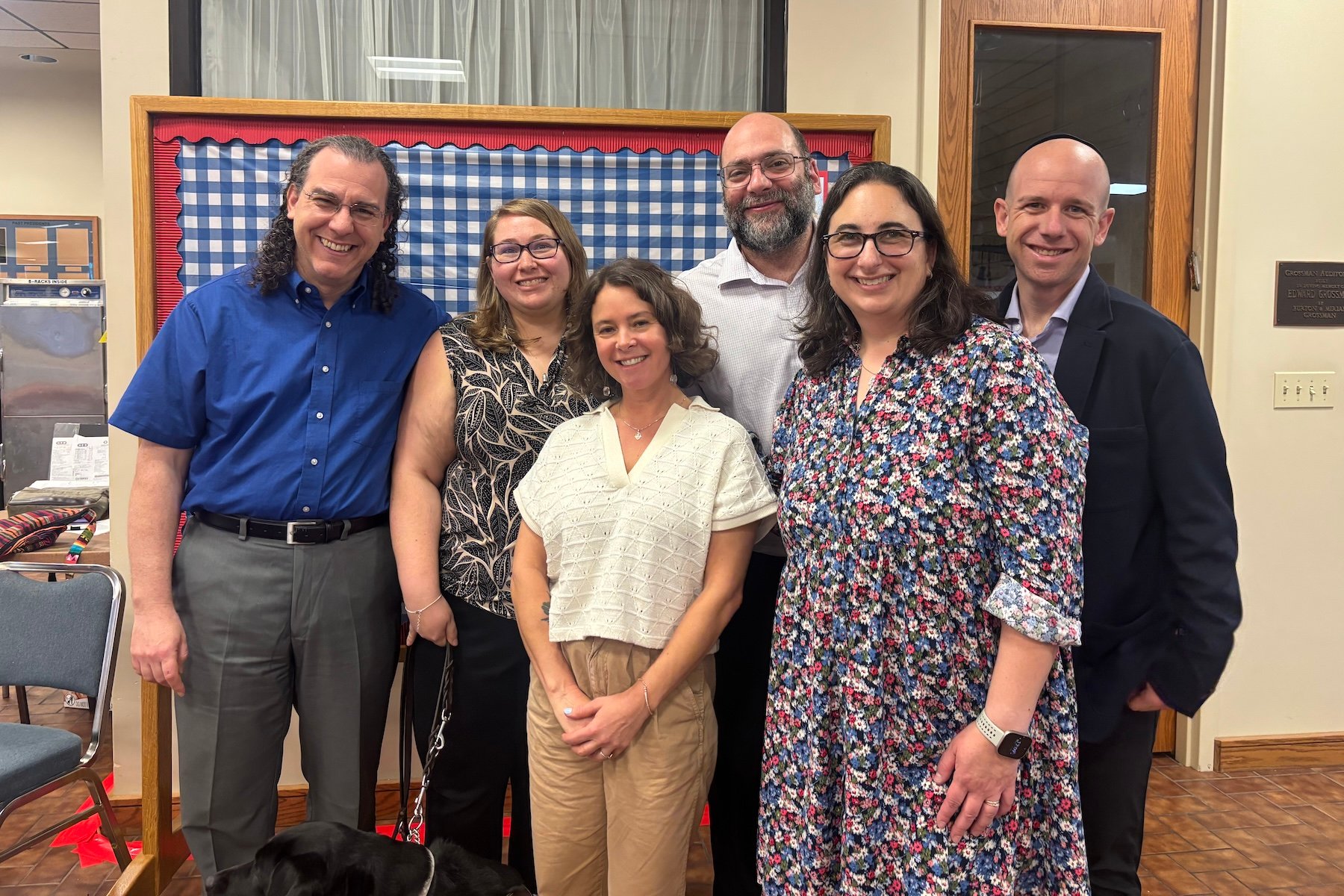
For four days, I joined my Cohort 3 alumni peers—Rabbi Gabrielle Cohn (Congregation Beth Israel, Corpus Christi, Texas), Rabbi Jennie Bunde (Temple Sholom, Peoria, Ill.), Dr. Lara Giordano (Lawrence Jewish Community Congregation, Lawrence, Kan.), and Rabbi Dave Almog (Congregation Anshe Emeth, Hudson, N.Y.)—alongside Rabbi Dr. David Freidenreich of Colby College to learn, pray, and reconnect. Our host, Rabbi Gabrielle Cohn, opened the doors of Congregation Beth Israel (CBI) and her community with extraordinary warmth and generosity. Throughout the weekend, CBI congregants and lay leaders stepped away from their busy preparations to sit with us in dedicated learning sessions—walking us through the rich history of Corpus Christi’s Jewish community, candidly sharing lessons from synagogue mergers, and giving us an honest, inspiring window into how a proud congregation sustains vibrant Jewish life along the Texas Gulf Coast.
Shabbat brought moments that cut straight to the core of why I do this work. On Friday night, Congregation Beth Israel hosted a special Veterans Day service, where I had the honor of offering the guest D’var Torah (talk on the weekly Torah portion) alongside the Prayer for America’s Military Personnel. Standing on a bimah (synagogue platform) in South Texas—bridging the world of Fort Bragg’s paratroopers and military families with a warm, welcoming Gulf Coast congregation—was a powerful reminder that no matter where we are stationed or planted, Jewish communities hold our service members close in prayer and gratitude. The next morning, we prayed together, dove into a lively Torah study session led by Rabbi Jennie Bunde on “Kosher Gone Wrong,” and learned with Rabbi Dr. Freidenreich. Stepping out of my daily routine at Fort Bragg allowed me to sit in the pews, be nourished by a sister community, and share the spiritual load rather than carrying it alone.
Then came the centerpiece of my immersion into Corpus Christi Jewish life: Congregation Beth Israel’s legendary annual Jewish Food Fest. Now in its 41st year, the two-day festival—organized by the CBI Sisterhood—has been bringing the entire Coastal Bend community together for over four decades. Even after facing real uncertainty in recent years, the festival has surged back with renewed leadership and extraordinary communal backing, transforming the synagogue into a bustling hub of Jewish heritage, live music, sanctuary tours, and traditional cuisine—from brisket, kugel, and matzah ball soup to homemade challahs, blintzes, and sour pickles shipped in from Brooklyn. For me, Food Fest wasn’t just a seminar topic on sustainable synagogue fundraising; it was a master class in small-town Jewish pride. I didn’t just observe from the sidelines—I rolled up my sleeves and worked tallying shifts alongside CBI volunteers, watching thousands of neighbors line up to taste Jewish hospitality and connect with their Jewish friends and neighbors.
If there was one moment that captured the true spirit of the weekend, it happened after Shabbat ended. When travel disruptions left Rabbi Dr. Freidenreich stranded in Texas for an extra day, Rabbi Cohn and her congregants immediately sprang into action, making sure he was sheltered, cared for, and treated like family until he could fly north. As the saying goes, if you are going to get stuck anywhere, get stuck in a small-town Jewish community.
Throughout the year, our Makom cohort meets monthly over Zoom to consult on leadership challenges, share resources, and support one another from afar. Spending a weekend together in person in Corpus Christi—sharing an Airbnb, trading stories over breakfast, praying together, and tallying Food Fest orders side by side—took our bonds to a completely new level. I returned to Fort Bragg recharged, deeply grateful to Rabbi Cohn, Congregation Beth Israel, and the Center for Small Town Jewish Life, and more convinced than ever that while our communities may be small in numbers, the network holding us together is stronger than ever.
About the Author
Rabbi Dr. Scott Klein serves as an active-duty U.S. Army Chaplain and the garrison rabbi at Fort Bragg, N.C. A champion of education and leadership, he holds a doctorate in educational leadership and a master’s degree in Jewish professional studies with a focus on nonprofit management, and he received his rabbinical ordination from the Academy for Jewish Religion in Yonkers, N.Y. He also serves as a Jewish Education and Engagement Consultant for NECHAMA – Response to Disaster.
Read more from Rabbi Klein about the Makom retreat and leading Jewish life in small town America.